Preparing Your Chimney for Heavy Fall Rain: Leak Prevention & Chimney Repair Tips for Nassau & Suffolk Homes
Table of Contents
If you’ve lived on Long Island long enough, you know how dramatic fall weather can get. One week feels like summer, and the next brings wind gusts off the Sound, sideways rain, and the kind of storms that expose every weak point in your home’s exterior. Chimneys are often the first place homeowners notice trouble — especially when heavy fall rain turns small cracks or worn flashing into full-on leaks.
I’ve heard countless homeowners in Nassau and Suffolk say, “I thought the leak was from my roof — I had no idea it was the chimney.”
That’s one of the reasons chimney leaks are so frustrating: the symptoms don’t always show up where the problem starts. Water might enter through a cracked concrete crown but drip out near a window. Or a damaged chimney cap may cause moisture that eventually shows up in your attic insulation.
The good news?
Most chimney leaks are preventable with seasonal maintenance — and fall is the perfect time to get your chimney ready before winter storms arrive.
Why Chimney Leaks Get Worse During Heavy Fall Rain on Long Island
Long Island’s coastal weather is tough on masonry. Between ocean humidity, saltwater corrosion, the freeze-thaw cycle, and sudden temperature swings, chimneys in Nassau and Suffolk take a beating. Rain penetrates aging brick, cracked mortar joints, worn concrete crowns, and rusted flashing far more aggressively once the summer heat ends.
Common causes of fall chimney leaks include:
- cracked or porous chimney bricks
- deteriorating mortar joints
- damaged or missing chimney caps
- broken chimney crown or concrete crown
- rusted or lifted flashing
- clogged chimney flue or venting system
- water penetration around prefab metal chimneys
- improper roof-to-chimney sealing
- deteriorated flue liners
Once water gets inside the chimney structure, it spreads easily. Moisture becomes trapped, the masonry saturates, and leaks travel to ceilings, drywall, and even electrical systems. This leads to mold, mildew, and significant structural damage if ignored.
This is why every homeowner in Nassau and Suffolk County should treat fall rain as an early warning system — your chimney is showing you where it needs help.
How to Identify a Chimney Leak Before It Causes Serious Damage
The earliest signs of a chimney leak aren’t always dramatic. Sometimes it’s just a faint musty smell in the fireplace after a storm. Other times, it’s subtle staining or dampness that only shows up in the fall.
Watch for:
- dark water stains on walls or ceilings near the chimney
- damp fireplace smell after heavy rain
- peeling interior paint or bubbling plaster
- rust on fireplace doors or damper
- white staining (efflorescence) on exterior masonry
- visible cracks on the chimney crown
- loose bricks or deteriorated mortar joints
- water dripping into the firebox
- pooling water on the smoke shelf
If you see any of these signs — especially after a rainy week — it’s time to schedule chimney inspections before winter. Video inspections can help reveal hidden cracks, moisture pockets, or flue issues that homeowners won’t see from ground level.
The Most Common Leak Points on Long Island Chimneys (and How to Fix Them)
Chimney Crown Cracks
The concrete crown protects the entire chimney structure. When it cracks, water flows directly into the brickwork. Fall rain makes these cracks expand rapidly.
Fix: Crown sealing, crown rebuild, or complete replacement depending on damage.
Damaged or Missing Chimney Cap
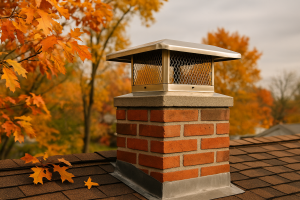
A cap is your chimney’s first line of defense. Without it, rain pours straight down the flue.
Fix: Install a stainless steel cap with a spark arrestor for year-round protection.
Rusted or Lifted Flashing
Flashing failures are the No. 1 cause of chimney leaks. Long Island storms lift flashing or loosen nails, letting water run between the roof and chimney.
Fix: Re-flashing or full flashing replacement using waterproof membrane.
Masonry Damage and Mortar Erosion
Brick absorbs water like a sponge when unprotected. Once saturated, water works its way into the attic or interior walls.
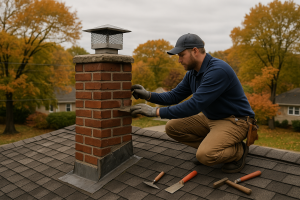
Fix: Tuckpointing, brick replacement, and breathable masonry waterproofing (siloxane/silane products).
Cracked or Deteriorated Flue Liners
A damaged flue liner allows moisture inside the chimney structure and weakens the entire system over time.
Fix: Chimney relining (stainless steel liners are the most durable on Long Island).
Chimney Waterproofing: Your Best Defense Against Fall Storms
Waterproofing is one of the most effective fall maintenance steps for homes in Nassau and Suffolk County. A proper chimney waterproofing treatment:
- prevents water penetration
- protects masonry from freeze-thaw cracking
- reduces long-term repair costs
- extends the lifespan of your chimney
- allows vapor to escape while blocking moisture (vapor-permeable)
Professional-grade chimney water repellents last 7–10 years and dramatically reduce the risk of chimney leaks during heavy fall rain.
Why Fall Is the Ideal Time for Chimney Inspections & Repairs on Long Island
Fall is the sweet spot for chimney repair because:
- masonry cures best in cool weather
- winter freeze-thaw cycle will make existing cracks worse
- you avoid emergency repairs during winter storms
- chimney cleaning reveals hidden leak pathways
- heating season increases moisture and pressure inside chimney systems
- early detection prevents damage to roofs, attics, and ceilings
Long Island’s fall storms are the perfect reminder to schedule inspections before the winter season starts — especially if your chimney hasn’t been serviced in over a year.
Protect Your Long Island Home Before the Next Storm Hits
Your chimney is a weather-exposed structure that takes more damage from fall storms than almost any other part of your home. Whether you’re in Massapequa, Smithtown, Huntington, Oceanside, or Babylon, heavy rains hit chimneys hard — and leaks get worse fast if not treated early.
Professional chimney service during the fall can prevent:
- water damage
- mold and mildew
- structural weakening
- costly interior repairs
- carbon monoxide risks
Recent Posts